
✓ Updated September 2026
Weather data and travel information verified current
Best Time to Visit Etosha National Park, Namibia: Jun or Jul 2027
🗺️ Start planning your trip
Discover tours, activities, and experiences in Etosha National Park, Namibia
Quick Answer:
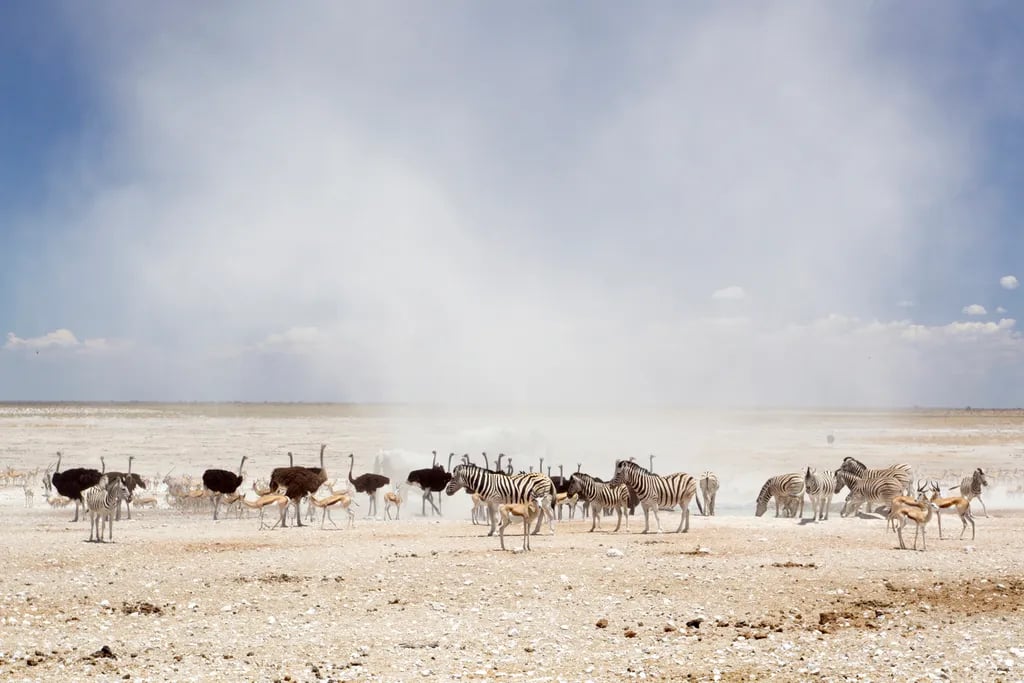
For an unforgettable safari experience in Etosha, aim for the dry season, roughly from May to October. This is when the park's waterholes become vibrant hubs of activity, drawing in a spectacular array of wildlife seeking refreshment. Imagine the thrill of witnessing elephants, lions, and graceful giraffes congregating under the vast African sky, their silhouettes painted against breathtaking golden sunsets. The cooler temperatures during these months also make for comfortable game drives, allowing you to soak in the sights and sounds of this incredible landscape without the intense heat.
Best Months to Visit:
Airport Code
WDH
Coordinates
-19.15°, 15.95°
Climate Overview
Etosha National Park experiences a dramatic dance between dry heat and life-giving rains. The long dry season, from May to October, bakes the landscape under a relentless sun, turning the earth to dust and concentrating wildlife around precious waterholes – a photographer's dream of stark beauty and patient observation. As the rains arrive from November to April, the park transforms. The air grows thick with humidity, the sky cracks with thunder, and the parched earth bursts into vibrant green. This 'green season' brings a different kind of magic, with newborn animals, a symphony of bird calls, and the exhilarating feeling of nature's renewal, though be prepared for sudden downpours that can reshape your daily plans.
Best months at a glance: Jun, Jul
Jump to the month-by-month guide →Take this guide with you — download it as a free PDF
Weather, best months, things to do, and travel tips
Planning a Etosha National Park, Namibia trip? Explore what's available.
Top Things to Do
The Great White Etosha Pan
Stand at the edge of the vast, shimmering Etosha Pan, a surreal salt pan stretching as far as the eye can see. During the dry season, it transforms into a cracked, white expanse, offering a starkly beautiful landscape that feels otherworldly. Look for mirages dancing on the horizon and imagine the ancient lake that once filled this space.
Waterhole Wildlife Spectacle
Position yourself at one of Etosha's famous waterholes, especially Okaukuejo or Halali, as dusk settles. This is where the magic happens: elephants, rhinos, lions, and a kaleidoscope of antelope species converge for a drink, creating an unforgettable natural drama. Bring a red-filtered flashlight to observe nocturnal visitors without disturbing them.
Bushman Rock Art at Twyfelfontein
Venture slightly outside the park to Twyfelfontein (a UNESCO World Heritage Site) to witness ancient San rock engravings, some dating back thousands of years. These intricate carvings depict animals and human figures, offering a profound connection to Namibia's earliest inhabitants. Hire a local guide to decipher the stories etched into the sandstone.
Sunset Safari Drive
Embark on a guided safari drive as the sun begins its descent, painting the savanna in hues of orange and purple. The golden hour is prime time for spotting predators on the move and observing animals in their most active state before nightfall. Ask your guide about their favorite, less-visited spots for sundowners.
💡 Travel Tip: For the best value on hotels during this season, check current rates on Trip.com.
Essential Travel Tips
Don't underestimate the Namibian sun, even in winter! Pack a wide-brimmed hat, high SPF sunscreen, and sunglasses. You'll be spending a lot of time in your vehicle or out on game drives, and the sun can be intense, leading to quick sunburns if you're not prepared.
While credit cards are accepted at lodges and some larger shops, always carry some Namibian Dollars (NAD) or South African Rand (ZAR) for smaller purchases, tips, and entrance fees at remote gates. ATMs are scarce outside of major towns, so stock up before you head into the park.
Keep your vehicle doors locked at all times, even when just stopping for a quick photo. While Etosha is generally safe, you're in the wild, and animals can be curious or unpredictable. Never leave valuables visible in your car.
Be mindful of local customs when interacting with park staff or people in nearby communities. A friendly greeting like 'Mhoro' (Shona) or 'Goeie dag' (Afrikaans) goes a long way. Always ask permission before taking photos of people.
A 4x4 vehicle is highly recommended for Etosha, especially if you plan to explore beyond the main gravel roads. While many main routes are manageable with a 2WD, a 4x4 offers better clearance and traction, making your journey smoother and safer, particularly after rain.
Pack plenty of snacks and water, especially if you're self-driving. While there are restaurants at the rest camps, they can be basic, and you might spend hours on game drives without easy access to food. Think nuts, dried fruit, and energy bars for those long stretches.
Compare live hotel deals in Etosha National Park, Namibia from hundreds of booking sites and reserve in a few taps — no booking fees.
We may earn a commission when you book through these links, at no extra cost to you.
💡 Travel Tip: If you're planning your trip, it's worth checking flight prices on Trip.com before you decide.
Find Your Best Month to Visit Etosha National Park
Pick what matters most to you and we'll rank every month of the year using Etosha National Park's actual weather data.
- #1OctBest match🌡️ 93°F high🌧️ 2 rainy days🌅 12.8h daylight
- #2Sep🌡️ 90°F high🌧️ 1 rainy days🌅 12.3h daylight
- #3Nov🌡️ 93°F high🌧️ 4 rainy days🌅 13h daylight
- #4Apr🌡️ 88°F high🌧️ 2 rainy days🌅 12.1h daylight
- #5Dec🌡️ 93°F high🌧️ 6 rainy days🌅 13.2h daylight
- #6Aug🌡️ 84°F high🌧️ 0 rainy days🌅 11.9h daylight
- #7May🌡️ 84°F high🌧️ 1 rainy days🌅 11.7h daylight
- #8Mar🌡️ 90°F high🌧️ 6 rainy days🌅 12.5h daylight
- #9Jan🌡️ 93°F high🌧️ 9 rainy days🌅 13.2h daylight
- #10Jun🌡️ 81°F high🌧️ 0 rainy days🌅 11.5h daylight
- #11Jul🌡️ 81°F high🌧️ 0 rainy days🌅 11.6h daylight
- #12Feb🌡️ 91°F high🌧️ 8 rainy days🌅 13h daylight
Weather Details
Monthly Weather Data Table
| Month | High (°C) | Low (°C) | High (°F) | Low (°F) | Rainfall (mm) | Rain Days | Daylight (h) |
|---|---|---|---|---|---|---|---|
| Jan | 34°C | 18°C | 93°F | 64°F | 75mm | 9 days | 13.2h |
| Feb | 33°C | 18°C | 91°F | 64°F | 70mm | 8 days | 13h |
| Mar | 32°C | 17°C | 90°F | 63°F | 50mm | 6 days | 12.5h |
| Apr | 31°C | 14°C | 88°F | 57°F | 15mm | 2 days | 12.1h |
| May | 29°C | 10°C | 84°F | 50°F | 5mm | 1 day | 11.7h |
| Jun | 27°C | 7°C | 81°F | 45°F | 0mm | 0 days | 11.5h |
| Jul | 27°C | 7°C | 81°F | 45°F | 0mm | 0 days | 11.6h |
| Aug | 29°C | 9°C | 84°F | 48°F | 0mm | 0 days | 11.9h |
| Sep | 32°C | 12°C | 90°F | 54°F | 5mm | 1 day | 12.3h |
| Oct | 34°C | 15°C | 93°F | 59°F | 15mm | 2 days | 12.8h |
| Nov | 34°C | 17°C | 93°F | 63°F | 30mm | 4 days | 13h |
| Dec | 34°C | 18°C | 93°F | 64°F | 50mm | 6 days | 13.2h |
Etosha National Park, Namibia Month by Month: Complete Guide
Planning your trip to Etosha National Park, Namibia? Here's what to expect each month:
Jan in Etosha National Park, Namibia
Weather
34°C°C / 93°F°F
9 days rainy days • 75mmmm
What to Expect
Hot, with daytime highs around 34°C. Plan indoor breaks during midday and stay hydrated. Occasional showers are likely, so a light rain jacket is handy. It's one of the warmest months of the year here. It also brings the most rain of any month here.
Crowd Level
🟢 Low - Quiet season, easy to find accommodation
Feb in Etosha National Park, Namibia
Weather
33°C°C / 91°F°F
8 days rainy days • 70mmmm
What to Expect
Hot, with daytime highs around 33°C. Plan indoor breaks during midday and stay hydrated. Occasional showers are likely, so a light rain jacket is handy.
Crowd Level
🟢 Low - Quiet season, easy to find accommodation
Mar in Etosha National Park, Namibia
Weather
32°C°C / 90°F°F
6 days rainy days • 50mmmm
What to Expect
Hot, with daytime highs around 32°C. Plan indoor breaks during midday and stay hydrated. Generally dry with little rainfall. Highs run about 2°C below Jan, one of the year's warmest months.
Crowd Level
🟢 Low - Quiet season, easy to find accommodation
Apr in Etosha National Park, Namibia
Weather
31°C°C / 88°F°F
2 days rainy days • 15mmmm
What to Expect
Warm and summery, with highs near 31°C — great for beaches and outdoor activities. Generally dry with little rainfall. Highs run about 3°C below Jan, one of the year's warmest months.
Crowd Level
🟡 Moderate - Comfortable crowds, good availability
May in Etosha National Park, Namibia
Weather
29°C°C / 84°F°F
1 day rainy days • 5mmmm
What to Expect
Warm and summery, with highs near 29°C — great for beaches and outdoor activities. Generally dry with little rainfall. Highs run about 5°C below Jan, one of the year's warmest months.
Crowd Level
🟡 Moderate - Comfortable crowds, good availability
Jun in Etosha National Park, Namibia
⭐ Best TimeWeather
27°C°C / 81°F°F
0 days rainy days • 0mmmm
What to Expect
Warm and summery, with highs near 27°C — great for beaches and outdoor activities. Generally dry with little rainfall. It's one of the coolest months of the year here. It's the driest month of the year here.
Crowd Level
🔴 High - Peak tourist season, book early
Jul in Etosha National Park, Namibia
⭐ Best TimeWeather
27°C°C / 81°F°F
0 days rainy days • 0mmmm
What to Expect
Warm and summery, with highs near 27°C — great for beaches and outdoor activities. Generally dry with little rainfall. It's one of the coolest months of the year here. It's the driest month of the year here.
Crowd Level
🔴 High - Peak tourist season, book early
Aug in Etosha National Park, Namibia
Weather
29°C°C / 84°F°F
0 days rainy days • 0mmmm
What to Expect
Warm and summery, with highs near 29°C — great for beaches and outdoor activities. Generally dry with little rainfall. Highs run about 5°C below Jan, one of the year's warmest months. It's the driest month of the year here.
Crowd Level
🔴 High - Peak tourist season, book early
Sep in Etosha National Park, Namibia
Weather
32°C°C / 90°F°F
1 day rainy days • 5mmmm
What to Expect
Hot, with daytime highs around 32°C. Plan indoor breaks during midday and stay hydrated. Generally dry with little rainfall. Highs run about 2°C below Jan, one of the year's warmest months.
Crowd Level
🟡 Moderate - Comfortable crowds, good availability
Oct in Etosha National Park, Namibia
Weather
34°C°C / 93°F°F
2 days rainy days • 15mmmm
What to Expect
Hot, with daytime highs around 34°C. Plan indoor breaks during midday and stay hydrated. Generally dry with little rainfall. It's one of the warmest months of the year here.
Crowd Level
🟡 Moderate - Comfortable crowds, good availability
Nov in Etosha National Park, Namibia
Weather
34°C°C / 93°F°F
4 days rainy days • 30mmmm
What to Expect
Hot, with daytime highs around 34°C. Plan indoor breaks during midday and stay hydrated. Generally dry with little rainfall. It's one of the warmest months of the year here.
Crowd Level
🟢 Low - Quiet season, easy to find accommodation
Dec in Etosha National Park, Namibia
Weather
34°C°C / 93°F°F
6 days rainy days • 50mmmm
What to Expect
Hot, with daytime highs around 34°C. Plan indoor breaks during midday and stay hydrated. Generally dry with little rainfall. It's one of the warmest months of the year here.
Crowd Level
🔴 High - Peak tourist season, book early
All Things to Do in Etosha National Park, Namibia
The Great White Etosha Pan
attractionStand at the edge of the vast, shimmering Etosha Pan, a surreal salt pan stretching as far as the eye can see. During the dry season, it transforms into a cracked, white expanse, offering a starkly beautiful landscape that feels otherworldly. Look for mirages dancing on the horizon and imagine the ancient lake that once filled this space.
Best time: Jun-Oct
Waterhole Wildlife Spectacle
naturePosition yourself at one of Etosha's famous waterholes, especially Okaukuejo or Halali, as dusk settles. This is where the magic happens: elephants, rhinos, lions, and a kaleidoscope of antelope species converge for a drink, creating an unforgettable natural drama. Bring a red-filtered flashlight to observe nocturnal visitors without disturbing them.
Best time: May-Oct
Bushman Rock Art at Twyfelfontein
culturalVenture slightly outside the park to Twyfelfontein (a UNESCO World Heritage Site) to witness ancient San rock engravings, some dating back thousands of years. These intricate carvings depict animals and human figures, offering a profound connection to Namibia's earliest inhabitants. Hire a local guide to decipher the stories etched into the sandstone.
Best time: Year-round
Sunset Safari Drive
activityEmbark on a guided safari drive as the sun begins its descent, painting the savanna in hues of orange and purple. The golden hour is prime time for spotting predators on the move and observing animals in their most active state before nightfall. Ask your guide about their favorite, less-visited spots for sundowners.
Best time: Year-round
Stargazing Under the Namibian Sky
natureFar from city lights, Etosha boasts some of the darkest skies on Earth, making for unparalleled stargazing. Lie back and marvel at the Milky Way stretching across the inky blackness, identifying constellations and perhaps even spotting shooting stars. Many lodges offer guided stargazing sessions.
Best time: Apr-Oct
Local Crafts at Okaukuejo Camp Shop
shoppingWhile not a bustling market, the camp shops, particularly at Okaukuejo, offer a curated selection of authentic Namibian crafts. Look for intricately carved wooden animals, hand-beaded jewelry, and woven baskets, often made by local communities. It's a great place to find a meaningful souvenir that supports local artisans.
Picnic Lunch at a Secluded Spot
foodPack a delicious picnic basket from your lodge or a local deli and find a quiet, designated picnic area within the park. Enjoy your meal surrounded by the sounds of the bush, far from the main tourist hubs. This offers a more intimate wildlife viewing experience and a chance to savor the tranquility.
Best time: Year-round
Planning your Etosha National Park, Namibia adventure? Enhance it with a customizable private tour guide via GoWithGuide—perfect for exploring beyond the city.
Getting Around Etosha National Park, Namibia
Self-Drive Safari Vehicle (4x4 Recommended)
Renting your own vehicle is the most popular and flexible way to explore Etosha. It allows you to set your own pace, stop for wildlife whenever you please, and access more remote areas. A 4x4 is highly recommended for comfort and capability on the park's gravel roads, especially during the rainy season.
Guided Safari Tours (Fly-in or Overland)
Numerous tour operators offer guided experiences, ranging from multi-day overland trips starting from Windhoek to fly-in safaris that land at airstrips near the park. These are ideal if you prefer not to drive or want expert knowledge from guides.
Transfers from Major Towns (e.g., Windhoek, Swakopmund)
Some lodges and tour operators offer transfer services from major hubs like Windhoek or Swakopmund to Etosha. This is a convenient option if you're not renting a car and want a direct transfer to your accommodation.
Local Shuttles (Limited Availability)
While not as common as other options, some smaller shuttle services might operate between towns and the fringes of Etosha. These are less common for direct park access and more for reaching lodges outside the park gates.
Walking Safaris (Within Campsites/Lodges)
While you cannot walk freely in the main park areas for safety reasons, some lodges and campsites offer guided walking safaris on their private concessions or designated safe areas around the accommodation.
💡 Travel Tip: This season usually means better deals — check what's available on Trip.com.
Planning a trip to Etosha National Park, Namibia? Grab a guidebook.
Browse Lonely Planet, Fodor's, Rick Steves, and more on Amazon — packed with maps, itineraries, and local tips.
As an Amazon Associate, we earn from qualifying purchases.
Similar Destinations
Compare Etosha National Park, Namibia With
Frequently Asked Questions
When is the absolute best time to visit Etosha for game viewing, and why?
For peak wildlife sightings, aim for the dry season, from May to October. During these months, waterholes become magnets for animals as natural water sources dry up, concentrating game and making them easier to spot. It's a photographer's dream, though be prepared for cooler mornings and evenings!
What's the deal with the 'floodlit waterholes' at the rest camps? Are they worth it?
Absolutely! The floodlit waterholes at camps like Okaukuejo are a game-changer, especially after dark. You can sit in comfort and watch a parade of animals – from elephants to rhinos and lions – come to drink under the stars. It's a magical experience you won't forget, and often provides sightings you might miss during the day.
Do I really need a 4x4 to get around Etosha, or can a regular car handle it?
While a 4x4 offers more comfort and peace of mind on the sandy tracks, a standard 2WD vehicle is perfectly adequate for Etosha's main roads, which are generally well-maintained gravel. Just drive cautiously, especially after rain, and stick to the designated routes. You'll be fine with a sedan or SUV.
Besides the main waterholes, are there any lesser-known spots that offer great game viewing?
Venture towards the eastern side of the park, particularly around the Namutoni area, and explore some of the smaller, less frequented waterholes. Sometimes, the quieter spots can yield incredible sightings with fewer vehicles around. Keep an eye out for areas with denser vegetation too, as predators often lurk there.
What should I pack for Etosha, beyond the usual safari gear?
Don't forget a good quality headlamp or flashlight – essential for navigating camps at night and for those floodlit waterhole sessions. Also, pack layers, as mornings and evenings can be surprisingly chilly, even during the warmer months. And a good pair of binoculars is non-negotiable!
Are there any specific etiquette rules or customs I should be aware of in Etosha?
The most important rule is to respect the wildlife and maintain a safe distance; never feed the animals. Inside the rest camps, keep noise levels down, especially at night, to allow everyone to enjoy the atmosphere and the sounds of the bush. Also, always close gates behind you when entering or exiting sections of the park.
Is Etosha National Park, Namibia expensive to visit?
Costs in Etosha National Park, Namibia vary a lot with your travel style and when you go, with prices generally peaking around Jun. Booking accommodation and activities ahead, travelling outside the busiest months, and comparing prices across booking sites are the most reliable ways to keep your trip affordable.
What is Etosha National Park, Namibia famous for?
Etosha National Park, Namibia is famous for Waterhole Wildlife Spectacle, Stargazing Under the Namibian Sky, and Bushman Rock Art at Twyfelfontein. Position yourself at one of Etosha's famous waterholes, especially Okaukuejo or Halali, as dusk settles. This is where the magic happens: elephants, rhinos, lions, and a kaleidoscope of antelope species converge for a drink, creating an unforgettable natural drama. Bring a red-filtered flashlight to observe nocturnal visitors without disturbing them. The best time to experience it all is during Jun or Jul.
When you're ready to book Etosha National Park, Namibia
Compare prices across top travel sites to find the best deal.
Never Miss the Best Time to Visit Etosha National Park, Namibia
Get the best travel timing tips delivered to your inbox:
Plan Your Etosha National Park Trip
Great weather, fewer crowds — shoulder season is a smart time to visit. Check availability now.
Tip: Booking through these links may earn us a small commission at no extra cost to you, helping support this site's free content!